 English,
 Spanish,
 Polish,


Free Consultation
630-932-9100

-

- Home
- Our Firm
- Practice Areas
- Divorce
- Alimony and Maintenance
- Child Support
- College Expenses
- Special Needs Children and Divorce
- Parental Responsibility / Custody
- Sole Custody vs. Joint Custody
- Parenting Plans and Visitation
- Child Relocation
- Property and Asset Division
- Retirement, 401k Accounts and Pensions
- Debt Division
- Post Decree Modifications
- Post Decree Enforcement and Contempt Hearings
- Dissolution of Arranged Marriages
- Tax Consequences and Divorce
- Uncontested Divorce
- Divorce Involving Mental Health Issues or Addictions
- Divorce and the Stay-at-Home Parent
- Divorce FAQs
- Family Law
- Personal Injury
- Motor Vehicle Accidents
- Auto Accidents
- Truck Accidents
- Amazon Delivery Driver Accidents
- Motorcycle Accidents
- Rideshare Accidents
- Pedestrian Accidents
- E-Bike/E-Scooter Accidents
- Boat Accidents
- Aviation Accidents
- Premises Liability
- Medical Malpractice
- Nursing Home Abuse
- Wrongful Death
- Construction Site Accidents
- Other Serious Injuries
- Personal Injury FAQs
- Workers' Compensation
- Construction Accidents and Injuries
- Warehouse and Factory Worker Injuries
- Healthcare Worker Injuries
- Office Worker Injuries
- Shipping and Trucker Worker Injuries
- Types of Workers' Compensation Injuries
- Back and Neck injuries
- Repetitive Stress Injuries
- Arm and Shoulder Injuries
- Knee Injuries
- Occupational Diseases
- Specific Accident Cases
- Who We Represent
- Workers' Comp Death Benefits
- Filing a Workers' Comp Claim
- How to Qualify for Benefits Under Workers' Comp
- Vocational Rehabilitation Rights
- Workers' Compensation FAQs
- Criminal Defense
- Immigration
- Bankruptcy
- Estate Planning
- Real Estate
- Divorce
- Success Stories
- Testimonials
- Media
- Blog
- Contact Us
When Can Improperly Maintained Equipment Lead to Truck Accidents?
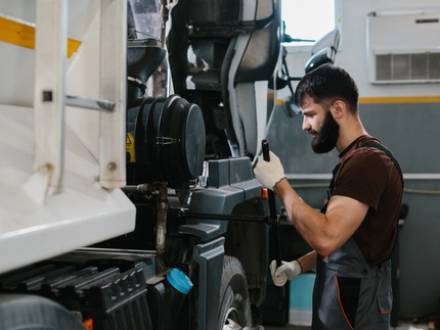 Illinois roads see heavy commercial truck traffic, and when a truck is not properly maintained, other drivers are affected. Trucking companies have a legal duty to keep their vehicles in safe working condition before every run, covering everything from brakes and tires to lights and couplings. When truck equipment maintenance is ignored, the resulting crashes tend to be serious.
If you were hurt in a truck wreck in 2026, a Lombard, IL personal injury attorney at our firm can help you figure out what caused the crash and who is responsible.
Common Types of Equipment Failures That May Result in Truck Crashes
Semi-trailer trucks have many complex systems that must be regularly checked. When required maintenance is skipped, important parts can fail.
Tires
Tire blowouts are a common cause of truck crashes. They can happen when tires are not properly inflated, have worn treads, or have been damaged. When a tire blows out at high speed, the driver may lose control of the vehicle.
Brakes
Tractor-trailers use air brakes to slow and stop. If parts such as air hoses or brake shoes are not checked and replaced when needed, they can fail. A driver may then be unable to stop in time to avoid a crash.
According to the Commercial Vehicle Safety Alliance's 2025 International Roadcheck results, brake-system violations were the largest category of vehicle out-of-service violations, accounting for 24.4 percent of all violations. Another 16.7 percent involved trucks with 20 percent or more defective brakes. That means brake problems are not an edge case. They are among the most common serious maintenance failures inspectors find on trucks already in service.
Trailers and Couplings
If a trailer's wheels are not properly aligned, the trailer may sway or jackknife. Jackknife crashes are particularly dangerous because the swinging trailer can sweep across multiple lanes, leaving nearby drivers with no time to brake or steer clear. If couplings are not kept up, a trailer can break free during transit, overturn, and block the road.
Lights and Electrical Systems
A truck's lights let other drivers see it and track its movements. When the lights are not working, nearby drivers may not notice the truck slowing or changing lanes. Other electrical systems can also fail if not maintained, affecting a driver's control over the vehicle.
Engines
A failing engine may reduce a driver's control over the truck. An engine that runs too hot can also catch fire during a crash. Either problem can turn a manageable situation into a serious collision.
Federal law requires trucking companies to inspect, repair, and maintain their trucks because equipment failures put other drivers in danger.
What Does Federal Law Require Trucking Companies to Do for Maintenance in Illinois?
Federal law sets clear rules for truck inspection and maintenance. Under Title 49 of the Code of Federal Regulations, Part 396, motor carriers must inspect, repair, and maintain every vehicle they operate so it stays safe to use.
Drivers must check that the truck is safe before driving. At the end of the workday, they must prepare a written driver vehicle inspection report if they find or are told about a defect that could affect safety or cause a breakdown. Any safety-related defects must be repaired before the truck is used again, and carriers must keep maintenance records.
Trucks can be pulled over for roadside inspections at any time. Inspectors check brakes, tires, lights, and steering. If a truck has serious problems, it can be pulled out of service on the spot. A recent passing inspection does not always mean maintenance was done correctly.
Carriers are also required under federal law to have a systematic inspection program in place, meaning maintenance cannot be reactive. Parts must be checked on a schedule, not just when a driver reports a problem. An experienced attorney can request inspection reports and look into the carrier's full record to confirm compliance.
Can You Sue a Third-Party Repair Shop After a Truck Accident in Illinois?
Many trucking companies do not perform their own repairs but instead hire outside shops to handle maintenance. This can make it less clear who is at fault when poor maintenance causes a crash.
In Illinois, more than one party can be held liable for the same injury. If a trucking company sent a truck to an outside shop for brake work and that shop did the job wrong, both the carrier and the shop may owe damages. Illinois law allows injured people to bring claims against every party whose careless actions contributed to the crash.
Illinois follows a modified comparative fault rule. Under 735 ILCS 5/2-1116, an injured person can still recover damages if they were 50 percent or less at fault for the crash. This means that even if a trucking company tries to shift some blame onto you, you may still have a valid claim worth pursuing.
What Evidence Can Help Prove a Truck Maintenance Failure in Illinois?
Proving that a maintenance failure caused a crash requires the right evidence. Records that may support your claim include:
- Driver vehicle inspection reports (DVIRs)
- Maintenance logs showing when parts were last replaced or repaired
- Electronic logging device (ELD) data, which tracks vehicle activity and hours on the road
- Roadside inspection records from state or federal agencies
- Physical parts from the truck itself, if they can be saved
An attorney can send a legal hold letter to the trucking company, requiring them to preserve all records tied to the crash. Without this step, key documents may be destroyed through routine disposal.
Contact a Lombard, IL Truck Accident Lawyer for a Free Case Consultation
If you were injured in a truck accident caused by poor maintenance, the attorneys at Mevorah & Giglio Law Offices are ready to help. We serve clients from three offices in Lombard, Bloomingdale, and Naperville, with Saturday and evening appointments available. We offer free case evaluations so you can speak with our team and understand your options. Reach out to our DuPage County, IL personal injury lawyers today at 630-932-9100.









Offices in 3 Convenient DuPage County Locations
Lombard
900 E. Roosevelt Road
Lombard, IL 60148
Phone: 630-932-9100
Fax: 630-932-9868
MAP & DIRECTIONS
Bloomingdale
134 N. Bloomingdale Road
Bloomingdale, IL 60108
Phone: 630-529-2400
Fax: 630-529-7630
MAP & DIRECTIONS
Naperville
Phone: 630-420-1000
By Appointment Only

 Make a Payment


