 English,
 Spanish,
 Polish


Free Consultation
630-932-9100

-

- Home
- Our Firm
- Practice Areas
- Divorce
- Alimony and Maintenance
- Child Support
- College Expenses
- Special Needs Children and Divorce
- Parental Responsibility / Custody
- Sole Custody vs. Joint Custody
- Parenting Plans and Visitation
- Child Relocation
- Property and Asset Division
- Retirement, 401k Accounts and Pensions
- Debt Division
- Post Decree Modifications
- Post Decree Enforcement and Contempt Hearings
- Dissolution of Arranged Marriages
- Tax Consequences and Divorce
- Uncontested Divorce
- Divorce Involving Mental Health Issues or Addictions
- Divorce and the Stay-at-Home Parent
- Divorce FAQs
- Family Law
- Personal Injury
- Motor Vehicle Accidents
- Auto Accidents
- Truck Accidents
- Amazon Delivery Driver Accidents
- Motorcycle Accidents
- Rideshare Accidents
- Pedestrian Accidents
- E-Bike/E-Scooter Accidents
- Boat Accidents
- Aviation Accidents
- Premises Liability
- Medical Malpractice
- Nursing Home Abuse
- Wrongful Death
- Construction Site Accidents
- Other Serious Injuries
- Personal Injury FAQs
- Workers' Compensation
- Construction Accidents and Injuries
- Warehouse and Factory Worker Injuries
- Healthcare Worker Injuries
- Office Worker Injuries
- Shipping and Trucker Worker Injuries
- Types of Workers' Compensation Injuries
- Back and Neck injuries
- Repetitive Stress Injuries
- Arm and Shoulder Injuries
- Knee Injuries
- Occupational Diseases
- Specific Accident Cases
- Who We Represent
- Workers' Comp Death Benefits
- Filing a Workers' Comp Claim
- How to Qualify for Benefits Under Workers' Comp
- Vocational Rehabilitation Rights
- Workers' Compensation FAQs
- Criminal Defense
- Immigration
- Bankruptcy
- Estate Planning
- Real Estate
- Divorce
- Success Stories
- Testimonials
- Media
- Blog
- Contact Us
Recent Blog Posts
Visa Quotas: How do They Work?
 The word ‘quota’ has an ugly past, especially in the context of visas. In years past it was used as a bludgeon with which to deny safety to people in need. Today, there are more exceptions and protections for those truly in need, while visa quotas are reserved for those not in immediate danger. Still, there is a lot of misinformation about how the yearly caps work. If you are planning to apply for certain categories of visas, you must understand how the quota works lest you inadvertently disqualify yourself.
Family-Based Immigration
There are two classifications for visas available to those attempting to immigrate via a family-based petition. The first is for immediate relatives of U.S. citizens such as parents, children and spouses. There is no quota limit in force in this category. The second is for what are called preference categories—non-immediate relatives or people who are the wrong age to apply themselves (such as the child of a non-immigrant visa holder who is in the process of adjusting status).
For the second classification, the Immigration and Nationality Act (INA) allows 226,000 family-based visas to be granted per year. However, it is important to note that this is a minimum, not a maximum. The statutory wording refers to “at least” that amount being issued. The number actually issued each year varies. It is arrived at by subtracting the number of immediate relative visas and paroled immigrants from 480,000, and adding the number of unused employment preference visas.
Congress attempts to seek balance in nationality and also relationship to ensure that not too many of one category are permitted entry in any one year. Per-country ceilings are established under the INA that mandate that any given country may not exceed 7 percent of the number of permanent immigrants in a given year. This is not to restrict solely for restriction’s sake, but to ensure that no country dominates the number of visas granted each year. Such a thing would become a fairness issue.
There are four categories of preference for family-based petitions. They are:
Illinois' Repeat Drunk Driver Problem
 One in three drunk driving convictions are attributed to repeat offenders. In 2011 alone, over 1.2 million drivers were arrested for driving under the influence. This means well over 400,000 drivers are repeat offenders. In 2012, 35 percent of alcohol-related crashes in Illinois resulted in fatalities. Driving Under the Influence In Illinois, if your blood-alcohol concentration is .08 percent or higher, you are considered too drunk to drive. If your blood alcohol is .08 or above when you are pulled over, your license is immediately suspended. If your blood alcohol concentration is between .05 and .08 percent you may not be summarily suspended, but you may still be cited. You will be charged with driving under the influence. Not only is your license suspended for six months if you fail a sobriety test, the state will impose severe fines, mandatory community service hours, and driving penalties. In addition, court-ordered substance assessment, remedial education, treatment programs, and increased insurance premiums are part of the overall costs one faces for a drunk driving conviction. The consequences are more severe when you are considered a repeat offender. Drivers who are convicted of more than one offense face gradually increasing penalties and possible jail time. A second conviction can also result in a $5,000 fine, 240 hours of community service, and revocation of driving privileges for at least 5 years. Those who are facing a third conviction risk losing their license for 10 years, suspension of vehicle registration, jail time, and up to $25,000 in fines. Individuals who are convicted of three DUIs may spend up to seven years in prison and have their driver's license suspended for a minimum of 10 years. The punishment escalates with each passing DUI conviction. This does not even begin to take into account those drivers who face criminal charges for harming property or people during their drunk driving escapades. Drivers convicted of driving under the influence may also have a Breath Alcohol Ignition Interlock Device installed on their wheel. This device will not start the vehicle so long as there is alcohol on one's breath. It also requires the driver to blow into the device over the duration of the trip, to ensure sobriety is maintained. Driving under the influence one time is dangerous let alone multiple times. Repeat offenders put not only themselves but also every other driver on the road with their choice to get behind the wheel after they drink. Contact Our Experienced Accident Attorneys If you or a loved one was seriously injured or killed by a drunk driver, please contact an experienced DuPage County car accident attorney who can help. We can gather evidence about your case and help ensure that you recover compensation. Reach out to us today at Mevorah & Giglio Law Offices for an initial consultation and to see how we can be of assistance.
Divorce by Publication: The Case of the Missing Spouse
 In Illinois, couples may decide to divorce either by claiming that a divorce is fault-based or no fault-based. A no fault divorce basically provides that there are no specific reasons for which a couple may decide to divorce, other than their desire to separate. However, there are fault-based reasons by which a spouse may use.
Fault-Based Grounds for Divorce in Illinois
The following are the fault-based grounds for a divorce in Illinois:
- Impotence throughout the marriage;
- The spouse was already married at the time of the second marriage;
- Adultery;
- Habitual drunkenness for two years;
- Use of addictive drugs for period of two years;
Wintry Weather Causing Motor Vehicle Accidents
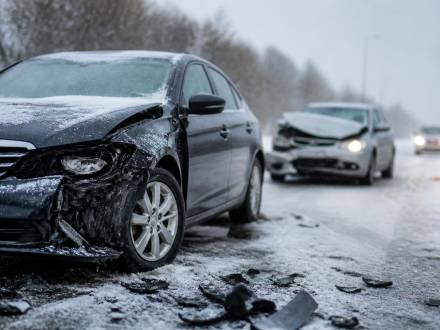 Ice covered roads and sub-zero temperatures plagued the region at the start of the new year, causing a number of motor vehicle accidents rise. Two semis caused a significant traffic backup near Interstate 90 during morning rush hour traffic. The resulting chain reaction caused at least 10 cars to crash. The two tractor-trailers jackknifed on the eastbound lanes of Route 47 courtesy of the icy conditions. Cars then found themselves spinning out of control, hitting the guardrails, and falling into ditches. Route 47 was then backed up for about five miles even after the lanes were cleared a few hours later. State troopers and first responders had problems clearing the scene because of the conditions. The single digit temperatures, wind, and light snow caused the roads to be extremely slippery. Illinois Winter Driving Snowfall in the Chicago area earlier this month left the roads covered in snow and ice. Major interstates, such as interstate 80 and 74, were 75 to 100 percent covered in ice for large sections of the roadway. Illinois is considered a high-risk road zone by icy road safety advocates. This means it is in the highest ranking of areas where fatal icy car accidents occurred. In 2015, there have already been six fatal crashes and the year has only just begun. In 2014 there was a total of 842 fatal car crashes, many of which occurred during the winter. Once the winter season rolls in, drivers need to take extra precaution and prepare for the worst. Many safety organizations advocate specific basic winter driving tips. Drivers should always ensure their motor vehicle has been winterized. Furthermore, motorists must stay informed and prepared, which includes having planned alternative routes and keeping updated to weather, road, and traffic reports. It also means being prepared with a winter survival kit in the back seat. Such a kit will keep drivers warm and fed in the event they are stranded due to weather, traffic jam, or an accident. Finally, driving defensively and carefully is a must. Ice patches and other slick spots are not always visible, even in the daytime. Because of the increased risk of accidents and injuries during the wintery weather season, it is crucial that you stay prepared. If the worst does happen and you are hurt in a car accident, you may be entitled to compensation. An experienced accident attorney will be able to help you evaluate your case, walk through the process, and help you receive the most compensation for claim. Contact Our Experienced Accident Attorneys If you are in an accident, contact one of our experienced auto, truck, or motorcycle accident attorneys. Our attorneys have experience assisting clients with all types of types of accident and personal injury claims. Contact us today if you need representation due to an automotive accident. At the Mevorah & Giglio Law Offices, our DuPage County car accident attorneys are ready to help you today.
Without Papers: The Undocumented Immigrant License Program
 In most states of the union, undocumented immigrants are not able to obtain a driver’s license. They are, indeed, not supposed to be driving on American highways. However, the reality is that immigrants are here. They work. And not everyone has access to public transportation. Undocumented immigrants will drive, and in Illinois and nine other states, plus Puerto Rico and the District of Columbia, steps are being taken to regulate it.
The Pros
There are multiple advantages to accepting the reality of undocumented drivers and reacting accordingly. First, when people obtain driver’s licenses, they are part of the system, so to speak. This means they are being regulated—by the need to purchase auto insurance, and by the need to obey traffic laws. When California initiated its program to grant licenses to the undocumented in 2013, it had the full backing of major insurance players in the state—the requirement to carry insurance makes people more careful on the road, and fewer uninsured and unlicensed drivers means a smaller burden on our already-overworked court system.
How Life Vests Affect Your Boating Accident Claim
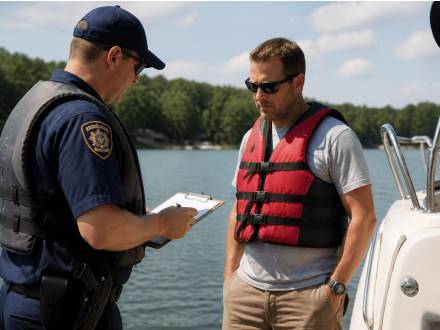 A recent accident on Rend Lake brought up the importance of wearing life vests when enjoying a trip on a boat. This is important not just for the obvious safety concerns, but because of the effect life vests can have on your potential boating lawsuit. Illinois Laws Regarding Boats Illinois law requires at least one personal flotation device (life vest) for each person on board a boat. The life vests must be U.S. Coast Guard approved offshore, near shore, or type-III flotation aids. Children under the age of 13 are required to wear the life vest on boats under 26 feet in length when the boat is under way. For personal watercraft, like a jet ski, passengers must be wearing an approved life vest. Not only are life vests required but they must be in good condition, easily accessible, and the proper size for the intended wearer. How does this affect your boating accident lawsuit? Again, outside of the safety concern and the high probability the life vest will greatly limit the personal injury you may suffer in a boating accident (especially in cold weather), the presence and use of a vest will affect the amount of compensation you receive in a case. This is because Illinois has adopted modified comparative negligence state as the standard for recovery in civil liability cases. Under 735 ILCS 5/2-1116, an injured party may only recover damages if he or she is less than 50 percent at fault for injuries. This means if the accident is 80 percent your fault, you cannot recover any damages, but if you are only 35 percent at fault, you can be compensated for your injuries. However—and this is where life vest come into play—the amount of damages you may recover can still be reduced by how much you are at fault. For example, if you can recover $100,000 and are 35 percent at fault, your reward will be reduced by $35,000. Not having an approved life vest that is being properly used or is easily accessible is one way in which fault for your injuries may be placed on you. The percentage of which your recovery would be reduced depends on the circumstances of the accident. Wearing a life vest or having the proper number of them on your boat is an easy enough way to improve boat safety and limit any comparative negligence claims by a defendant. The end result is that you are safer and your accident recovery is not limited by your "comparative negligence." This rule applies not just to boating accidents but any type of negligence claim, which includes most personal injury lawsuits. Reach Out to an Attorney for Help If you are in an accident, contact one of our experienced DuPage County personal injury attorneys. Our attorneys have over one hundred years of experience assisting clients with all types of types of boat accident or other personal injury claims. Contact us today if you need representation due to an accident. The attorneys at Mevorah & Giglio Law Offices can help you today.
Revenge Porn Law Signed by Illinois Gov. Quinn at the End of 2014
 At the end of a marriage or relationship, it is normal for there to be feelings of hurt, anger, frustration and hate. Generally, people who are dealing with these feelings find ways in which to vent out these negative feelings so that one day they may piece themselves together and hopefully find happiness, whether in themselves or later with another. Part of the venting may take place through friends, family, a therapist, and/or social media. However, what one vents out onto social media may have a serious and criminal effect on a person’s future.
The Crime of “Revenge Porn” Nationwide
In only a couple states has there been drafting of regulations against what has become known as “revenge porn.” California was the first state to pass legislation and convict someone for “revenge porn.” Illinois finally passed its own specific legislation, criminalizing the trend. Governor Pat Quinn signed into law in the last few days of December the revenge porn legislation categorizing the crime as a felony under Illinois law.
Study Finds Illinois 3rd Safest State for Teen Drivers
 A study, conducted by WalletHub, found that Illinois was the third safest state for teen drivers in 2014. Illinois' ranking reflects the positive measures the state has taken to combat teen driving deaths. However, motor vehicle accidents continue to be the leading cause of death of children between the age of 16 and 19. Teen Driving: The Dangers In 2011 alone, the Centers for Disease Control and Prevention found that 292,000 teens between the ages of 16 and 19 were treated in hospital emergency departments across the country for motor vehicle accident-related injuries. Approximately 2,650 teenagers were killed in the same year. This means that seven teens die every day from motor vehicle injuries. The 16 to 19-year-old age group is the one most at risk to die or be hurt in a car crash. In fact, these youth are three times more likely to be in a fatal car accident than a 20-year-old driver. The chances of being in a fatal car accident increase when a teen driver has passengers in the vehicle. Additionally, teens are at even higher risk of crashing during the first few months of receiving their driver's license. These numbers are extremely disconcerting considering young drivers only represent 14 percent of the U.S. population, even though they account for more than 30 percent of the total costs of motor vehicle injuries. The numbers are even higher among young males between the ages of 15 and 24. Young males in the at-risk age group of 16 to 19 years old are at even higher risk of dying from a crash accident. Moreover, the motor vehicle death rate for male drivers and passengers in this age group is twice as high as female teen drivers of the same age. There are a variety of factors that contribute to the higher death and accident rate of teenage drivers. Driver experience, driving with friends, nighttime driving, distracted driving, drowsy driving, reckless driving, impaired driving, and driving without seat belts are all major causes of teen accidents. Illinois' Teen Driving The WalletHub study looked nationwide to see what kind of teen driving laws states have in place, the average cost of car repairs, teen drinking and driving numbers, and the overall number of teen drivers in the state. The study found New York to be the safest state with Hawaii in second and Illinois third. Illinois was the safest state in the Midwest with the closest neighboring Midwest state (Kansas) only coming in at 17th. Illinois is also ranked as the second lowest state for teenage under the influence traffic violations. The study spotlighted the state's Graduated Driver's License Program—which grants driver's privileges in stages—as a reason for the state's safe driving statistics. The study found Illinois' Graduated Driver Licensing Program to be one of the top in the country. The study lists the following as the optimal provisions needed for an effective graduated driver license program: minimum age of 16 for a permit; six-month holding period; 30-50 hours supervised driving requirements; nighttime driving restriction; passenger restriction; cell phone restriction; and unrestricted license at age 18. Illinois goes above and beyond these requirements in its graduated driver license program. While Illinois has proven to be one of the leading states in teen driving safety, it is important to ensure all precautions are taken when allowing a teen to drive. The risk of injury or a fatal accident is too high to ignore. Contact Our Experienced Car Accident Attorneys If you or a loved one has been involved in an accident, contact one of our experienced DuPage County car accident attorneys. We will examine your case and help ensure that you receive the compensation that you deserve. Reach out to us today at Mevorah & Giglio Law Offices to see how we can be of assistance.
The Convention against Torture
 While the United States has had its differences with the leadership of the United Nations (UN), she has also been a signatory to several groundbreaking treaties. One of them is the U.N. Convention Against Torture (CAT), signed in 1984 and ratified 10 years later by the U.S.A.
The language of this convention has allowed some people to claim a form of immigration relief in the United States—yet it is still misunderstood and misinterpreted. An individual who does not qualify for asylum may still qualify for CAT protection.
The Convention in U.S. Law
CAT relief is perhaps best suited for those who specifically fear being tortured, rather than those with a generalized fear of future persecution. Not all forms of persecution qualify as torture. The standard is actually higher than the one for asylum. In an asylum case, you must show credible fear of future persecution. However, in CAT cases, you must show it is “more likely than not” that you would be tortured upon return to your home country.
When is an Employer Liable for an Employee's Conduct?
 Have you been in a car accident caused by someone driving in a vehicle provided by his or her employer? Were you injured in the accident? If so, you may have a claim against the employer. In Illinois, an employer may be liable at law for the actions of their employees, which includes car accidents. For instance, when an accident is caused by someone who is driving an employer-provided vehicle, the employer may be liable under respondeat superior.
Respondeat Superior
Respondeat superior is a legal doctrine that holds an employer responsible for the wrongful acts of an employee. An employee is a worker over whom the employer has a certain amount of control. If an employee/employer relationship exists, the employer may be liable for the actions of the employee.
Liability arises when an employee acts within the scope of the job duties outlined by his or her employer. In essence, if an employee acted within the scope of his or her employment, the employer may be liable for injuries sustained by others due to the employee's actions. Illinois courts have interpreted "within the scope of employment" in many different ways. Thus, it is important to work with an attorney in the event of an accident.









Offices in 3 Convenient DuPage County Locations
Lombard
900 E. Roosevelt Road
Lombard, IL 60148
Phone: 630-932-9100
Fax: 630-932-9868
MAP & DIRECTIONS
Bloomingdale
134 N. Bloomingdale Road
Bloomingdale, IL 60108
Phone: 630-529-2400
Fax: 630-529-7630
MAP & DIRECTIONS
Naperville
Phone: 630-420-1000
By Appointment Only

 Make a Payment


